You Won’t Believe How Slow Travel Transformed My Taste of Saint Petersburg
I used to rush through cities, ticking off landmarks like a checklist. But in Saint Petersburg, something shifted. Slowing down let me taste the city—literally. From steaming bowls of solyanka in cozy stolovayas to flaky pirozhki at dawn markets, every bite told a story. This isn’t just about food; it’s about connection, rhythm, and discovering Russia’s soul one quiet moment at a time. Let me show you how eating like a local changed everything.
The Mindset Shift: Why Slow Travel Fits Saint Petersburg
Saint Petersburg is not a city to be conquered in a weekend itinerary. Its beauty lies not only in the gilded domes of the Church of the Savior on Spilled Blood or the grand staircase of the Winter Palace but in the quiet corners where history breathes between cobblestones and canal reflections. The imperial capital of the Russian Empire for over two centuries, this city was built on vision, artistry, and a deep connection to European culture—yet it remains uniquely Russian in spirit. When travelers slow their pace, they begin to notice the rhythm beneath the surface: the way light filters through morning mist over the Neva River, how elderly women in babushkas tend small flower beds in courtyard gardens, or the soft chime of church bells drifting across Palace Square at dusk.
Fast-paced tourism encourages a checklist mentality—arrive, photograph, move on. But Saint Petersburg resists such treatment. Its layered past, from tsarist opulence to Soviet resilience, demands contemplation. By choosing to walk rather than rush, to linger over tea instead of gulping coffee between sights, visitors unlock a deeper form of cultural immersion. This shift in mindset transforms tourism into a more personal experience. Instead of merely observing, one begins to participate. And nowhere is this participation more tangible than at the dining table.
Meal times in Saint Petersburg are not interruptions to the day—they are central to it. Locals structure their lives around breakfast, lunch, and dinner, often gathering family and friends for extended conversations. Observing these routines offers insight into the values of patience, community, and tradition. A guided tour might explain the history of the Kazan Cathedral, but sitting across from a local grandmother who shares her recipe for pickled mushrooms reveals something far more enduring: the soul of a people shaped by seasons, scarcity, and celebration. Slow travel makes space for these moments. It allows time to notice details—a weathered doorframe carved with imperial insignia, a hidden bookstore behind an arched passage, the warm glow of a bakery window at 7 a.m.—that collectively form the true essence of the city.
Breakfast Like a Local: Starting the Day the Russian Way
In Saint Petersburg, mornings unfold gently. Unlike cities that wake with espresso and pastries, this northern capital begins its day with warmth, comfort, and nourishment. The traditional Russian breakfast is humble but deeply satisfying, rooted in centuries of agrarian life and seasonal cycles. Locals often start with kasha, a porridge most commonly made from buckwheat, simmered slowly with butter and sometimes topped with a dollop of tvorog, a fresh farmer’s cheese similar to cottage cheese but richer and creamier. This simple meal provides sustained energy, essential during long, cold winters when daylight is scarce and the body needs fuel.
Another staple is blini—thin, delicate pancakes traditionally associated with Maslenitsa, the week-long festival marking the end of winter. While festive versions come with caviar or smoked salmon, everyday blini are served with sour cream, jam, or even condensed milk. These can be found in neighborhood cafés tucked into historic buildings, where elderly waitresses move with practiced ease and the scent of black tea fills the air. One such place near the Sennaya Ploshchad market serves blini folded around warm tvorog filling, dusted lightly with powdered sugar. There’s no menu translation, no Wi-Fi sign—just a chalkboard in Cyrillic and a line of office workers starting their day the same way their parents did.
For those willing to rise early, visiting a local bakery just after dawn offers a sensory revelation. The warm aroma of freshly baked rye bread mingles with the sweetness of honey cakes and the savory scent of meat-filled pirozhki. These small, golden buns are sold by the piece, often wrapped in paper and eaten standing up. Watching bakers pull trays from wood-fired ovens connects modern travelers to a timeless rhythm of labor and care. Starting the day this way—quietly, mindfully, with food that has sustained generations—sets a tone of presence. It signals that today will not be about ticking off attractions but about experiencing life as it unfolds in this elegant, resilient city.
Street Food Gems: Finding Authentic Flavors Off the Beaten Path
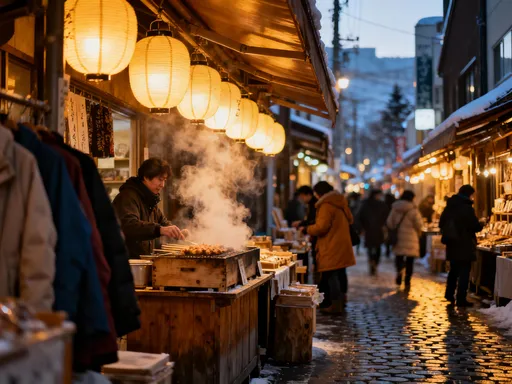
Beyond the grand avenues and museum queues, Saint Petersburg’s true culinary pulse beats in its side streets and transit hubs. Here, street food is not a trend but a necessity—a way for workers, students, and pensioners to eat well without spending much. The best indicators of quality? Long lines of locals, steam rising from carts, and handwritten signs in Russian. These unassuming vendors offer some of the most authentic flavors in the city, far removed from tourist-priced menus near Nevsky Prospekt.
One of the most beloved street foods is pelmeni—small dumplings filled with minced meat, typically pork, beef, or lamb, served boiling hot with sour cream and mustard. Found at metal carts near metro stations like Pushkinskaya or Vladimirskaya, these dumplings are handmade daily, often by women who have been preparing them for decades. A single portion costs less than two euros and delivers a burst of savory richness that warms the hands and soul alike. Equally popular are pirozhki, slightly larger than pelmeni and baked or fried, with fillings ranging from cabbage and egg to potato and mushroom or minced meat. Sold at kiosks under stone archways or near tram stops, they make perfect walking meals.
Another delight is syrniki—pan-fried curd fritters made from tvorog, lightly sweetened and dusted with sugar, often drizzled with jam or served with sour cream. These are especially common in late morning, found at small cafés or school canteens, where mothers drop off children and treat themselves to a warm bite. For visitors, navigating these options requires a bit of courage—most places accept cash only, and menus are rarely translated. But a friendly smile, a pointed finger, and a simple “Odno, pozhaluysta” (“One, please”) go a long way. Over time, patterns emerge: the busiest stalls usually have the freshest stock, and vendors who speak little English often take the most pride in their craft.
Exploring street food also means embracing spontaneity. One rainy afternoon near the Fontanka River, I followed the scent of frying dough to a tiny stall beneath a railway bridge. The vendor, a woman in a woolen hat, handed me a pirozhok filled with warm cabbage and rice. We shared a moment of silence as we both sipped tea from thermoses. No words were exchanged, yet the gesture felt deeply human. In that small act of sharing warmth in a damp city, I understood something essential: food here is not just sustenance. It’s connection, resilience, and dignity—all wrapped in a flaky crust.
The Art of the Long Lunch: Dining at a Stolovaya
If street food represents the pulse of daily life, then the stolovaya is its heart. These Soviet-era canteens, once found in nearly every neighborhood, are making a quiet comeback—not out of nostalgia, but because they still serve a vital purpose. Affordable, efficient, and deeply traditional, stolovayas offer a window into how most Russians eat when no one is watching. They are not restaurants designed for tourists; they are working-class institutions where pensioners, clerks, and construction workers gather for hearty, home-style meals.
Walking into a stolovaya feels like stepping into a living museum. Glass display cases showcase rows of prepared dishes: bowls of borscht with a swirl of sour cream, golden cutlets breaded and fried to perfection, plates of Olivier salad layered with potatoes, peas, carrots, and diced eggs, and steaming portions of buckwheat or mashed potatoes. Customers move along a counter, pointing to what they want, while staff in white coats serve with speed and precision. The atmosphere is communal, unpretentious, and refreshingly free of performative dining. At a shared table, I once sat beside a retired engineer who explained that he comes here every day because “the food tastes like my mother’s.”
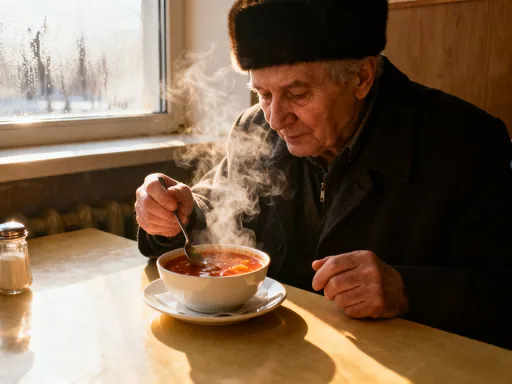
The menu is consistent across most stolovayas, built around dishes that are filling, nutritious, and deeply rooted in Russian cuisine. Borscht, perhaps the most iconic soup in Eastern Europe, is made with beets, cabbage, carrots, and beef broth, its deep red color as striking as its flavor. Solyanka, a sour and spicy soup packed with pickles, olives, and various meats, is a favorite during colder months. Main courses often include kotlety (meat patties), zaprakhanka (baked egg custard with onions), or beef stroganoff—tender strips of beef in a creamy mushroom sauce, served over buttered noodles. Desserts might be as simple as a slice of honey cake or a bowl of fresh fruit compote.
What makes the stolovaya experience transformative is not just the food, but the rhythm it encourages. Meals are not rushed. People sit, eat, read newspapers, and sometimes nap afterward. There is no pressure to turn over tables. This slow, deliberate approach to lunch stands in stark contrast to the grab-and-go culture of many Western cities. In Saint Petersburg, taking time to eat is not a luxury—it’s a norm. For the slow traveler, dining in a stolovaya is both an act of respect and a lesson in presence. It says: I am here. I will eat. I will stay awhile.
Tea Culture and Afternoon Rituals: Pausing with Purpose
In Saint Petersburg, tea is not a beverage—it is a ritual. More than just a drink, it is a pause in the day, a moment of reflection, a gesture of hospitality. Russians drink tea throughout the day, but the afternoon is its sacred hour. Whether at home, in a café, or during a break at work, tea time is treated with intention. It is rarely consumed alone; it is shared, offered generously, and accompanied by sweets, conversation, or quiet companionship.
Traditional tea in Russia is strong black tea, often brewed in a samovar—a large metal urn that keeps water hot for hours. Though electric kettles are now common, some households and old-fashioned cafés still use the classic samovar, its brass surface polished to a shine. The tea is concentrated, almost syrupy, and diluted with hot water to taste. A slice of lemon is standard, sometimes placed directly in the cup. Sugar is served in cubes, to be held between the teeth while sipping—a custom known as “zakusывать чай” (biting the tea).
The accompaniments are just as important as the tea itself. Pryaniki, spiced honey cakes often stamped with ornate designs, are a favorite. So are pastila, delicate fruit confections made from apple puree and egg whites, with a texture somewhere between marshmallow and fruit leather. In winter, dried fruits and nuts appear on the table; in summer, fresh berries and homemade jams take center stage. One afternoon, I was invited into a small apartment near the Smolny Cathedral, where an elderly woman served tea with a plate of vareniki—dumplings filled with sweet cherries. As we sat by the window watching the light fade over the rooftops, she told stories of her childhood during the Leningrad blockade, of how tea was a rare luxury, saved for special occasions. “Now,” she said, “I drink it every day. Because every day is special.”
This philosophy—that ordinary moments deserve celebration—is at the core of Russian tea culture. It teaches the traveler to slow down, to savor, to listen. In a world that values speed and productivity, the afternoon tea ritual is a quiet rebellion. It says: rest is not laziness. Presence is not wasted time. In Saint Petersburg, where history weighs heavily and beauty is everywhere, taking tea is a way of honoring both.
Evening Flavors: From Home Kitchens to Cozy Kvartirniki
As evening falls, Saint Petersburg transforms. The golden hour stretches over the canals, the streetlamps flicker on, and the city retreats indoors. For tourists, this might mean a formal dinner at a riverside restaurant. But for locals, dinner is often a private affair—an intimate gathering in a warm apartment, where food is homemade, conversation flows freely, and vodka is poured with care.
Being invited into a Russian home for dinner is one of the highest forms of hospitality. It is not done lightly. When extended, it signifies trust and warmth. I was fortunate to receive such an invitation from a friend of a friend, a teacher named Elena who lived in a pre-revolutionary building on Vasilyevsky Island. Her kitchen was small but immaculate, the table laden with dishes that represented generations of tradition. There was ikra—caviar served simply on buttered bread, pickled tomatoes and cucumbers in glass jars, and herring under a fur coat, a layered salad of salted herring, potatoes, beets, carrots, and mayonnaise, its name a whimsical nod to its colorful appearance.
The main course was pelmeni, handmade that morning, served with sour cream and a shot of chilled vodka. Elena explained that vodka is not about intoxication—it’s about ritual. It is sipped, not gulped, often accompanied by a small bite of food called a zakuska. “It’s about balance,” she said. “The cold, the burn, the flavor—all in harmony.” After dinner, we moved to the living room, where her son played the piano. Neighbors stopped by, bringing sweets and joining the music. This was a kvartirniki—a private apartment concert, a tradition that dates back to Soviet times when public gatherings were restricted. These events, built around music and food, were acts of cultural resistance and community building.
Today, kvartirniki are still held, though now they are more about connection than defiance. Attending one feels like being let into a secret world—a space where art, food, and friendship intertwine. The food is never fancy, but it is always meaningful. Each dish carries memory, each song tells a story. In these moments, the boundary between visitor and local dissolves. One is not just observing culture. One is living it.
Practical Slow-Travel Tips: How to Eat Your Way Through the City
Slow travel in Saint Petersburg is not just a mindset—it is a practice. It requires intention, preparation, and openness. The first step is choosing where to stay. Neighborhoods like Petrogradsky and Vasileostrovskaya offer a more authentic experience than the crowded hotels near Palace Square. These areas are residential, walkable, and full of local life. Morning jogs along the Kryukov Canal, evening strolls past 18th-century mansions, and spontaneous stops at corner bakeries become part of the rhythm.
Using public transportation mindfully enhances the experience. The metro is efficient, clean, and adorned with chandeliers and mosaics, but walking between stations reveals hidden courtyards and unexpected street art. Timing visits around meal hours ensures access to the best food. Stolovayas are busiest at noon; bakeries sell out of fresh pirozhki by mid-morning; markets like Apraksin Dvor come alive at dawn, when vendors lay out crates of pickles, smoked fish, and homemade sausages.
Learning a few key Russian phrases makes a difference. “Zdravstvuyte” (hello), “Spasibo” (thank you), and “Kofe, pozhaluysta” (coffee, please) open doors. Even mispronunciations are met with patience. Carrying cash is essential—many small vendors do not accept cards. A small notebook for jotting down favorite dishes or addresses helps create a personal food map of the city.
Perhaps most important is the willingness to accept unexpected invitations. Saying yes to tea with a stranger, joining a queue without knowing what’s being sold, or lingering at a café long after the meal ends—these are the moments that define slow travel. They cannot be planned, but they can be welcomed. Keeping a journal to record meals, impressions, and conversations adds depth to the journey. Over time, the city reveals itself not in monuments, but in tastes, textures, and shared silences.
A Journey Measured in Meals
Looking back, my trip to Saint Petersburg was not defined by the number of museums visited or photos taken. It was measured in meals—steaming bowls of borscht on rainy afternoons, quiet breakfasts with kasha and tvorog, laughter-filled dinners in warm apartments, and cups of tea shared with strangers who became friends. Slowing down did not mean doing less. It meant experiencing more—deeply, fully, authentically.
Each dish was a chapter in a larger story: one of survival, beauty, resilience, and warmth. Through food, I learned about history, family, and the quiet strength of a city that has endured war, revolution, and change, yet continues to welcome with open arms and full tables. Travel, at its best, is not about collecting destinations. It is about connection. It is about belonging, even if only for a moment.
So the next time you plan a trip, consider this: don’t just visit. Stay. Eat. Listen. Let the city feed you—not just with food, but with meaning. In Saint Petersburg, as in so many places, the truest way to understand a culture is not by seeing it, but by tasting it, one slow, deliberate bite at a time.